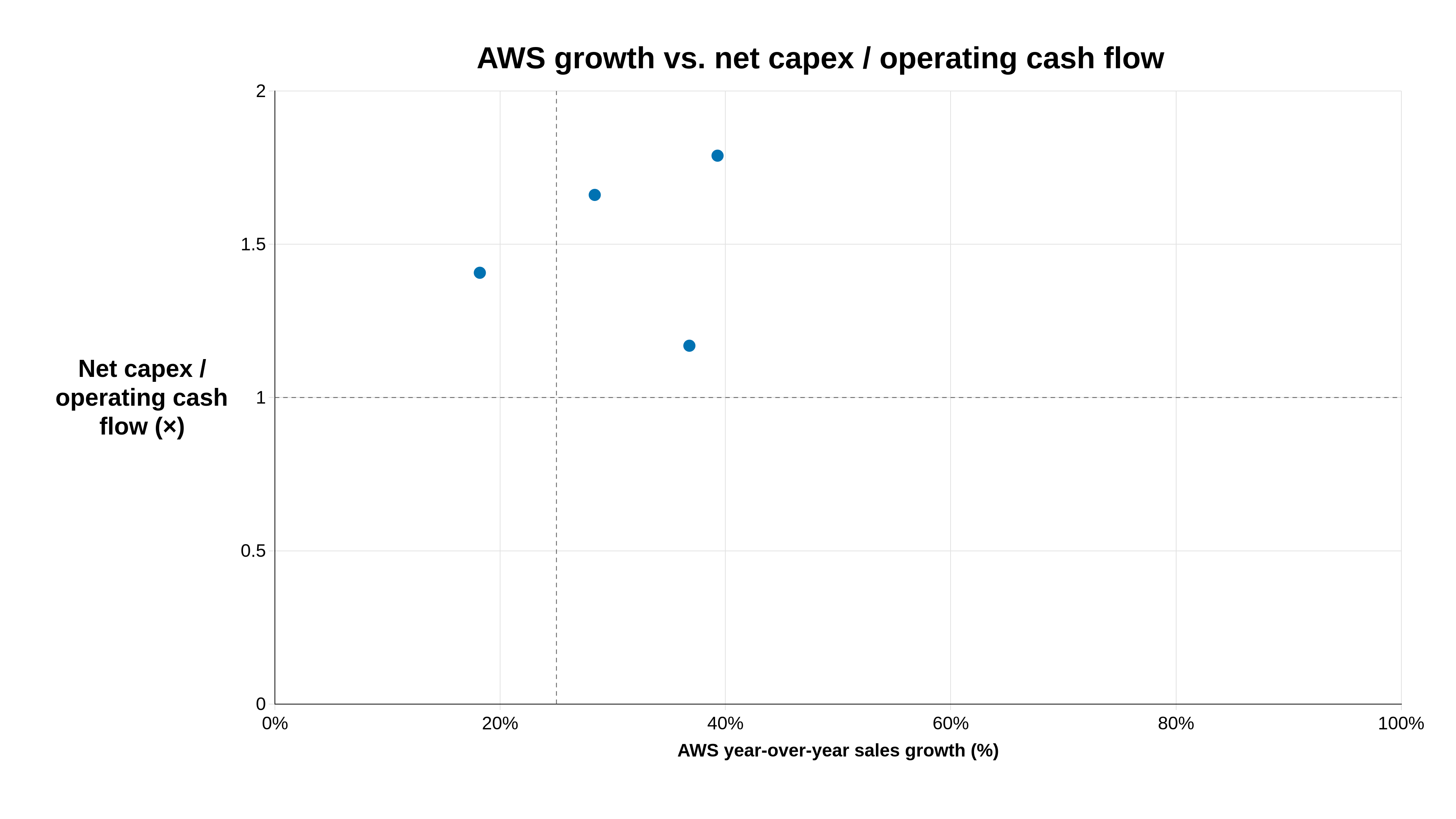
AWS year-over-year growth accelerated from 18.2% in Q4 2025 to 39.3% in Q3 2026, while Amazon’s quarterly net property-and-equipment spending rose to 179% of operating cash flow. The ratio exceeded 100% in all four quarters, meaning reported operating cash did not cover net capex during this AI-led expansion. The independent SEC filings quantify the spending pressure behind SI News’s report of AWS demand-driven growth and record quarterly capital investment.
Across Microsoft’s five latest reported quarters, Azure and other cloud-services growth accelerated from 39% to 48%, while Microsoft Cloud growth rose from 26% to 30%. The widening gap matters because the Azure result in SI News’s earnings story is part of a sustained acceleration in Microsoft’s infrastructure business, not just a one-quarter headline.
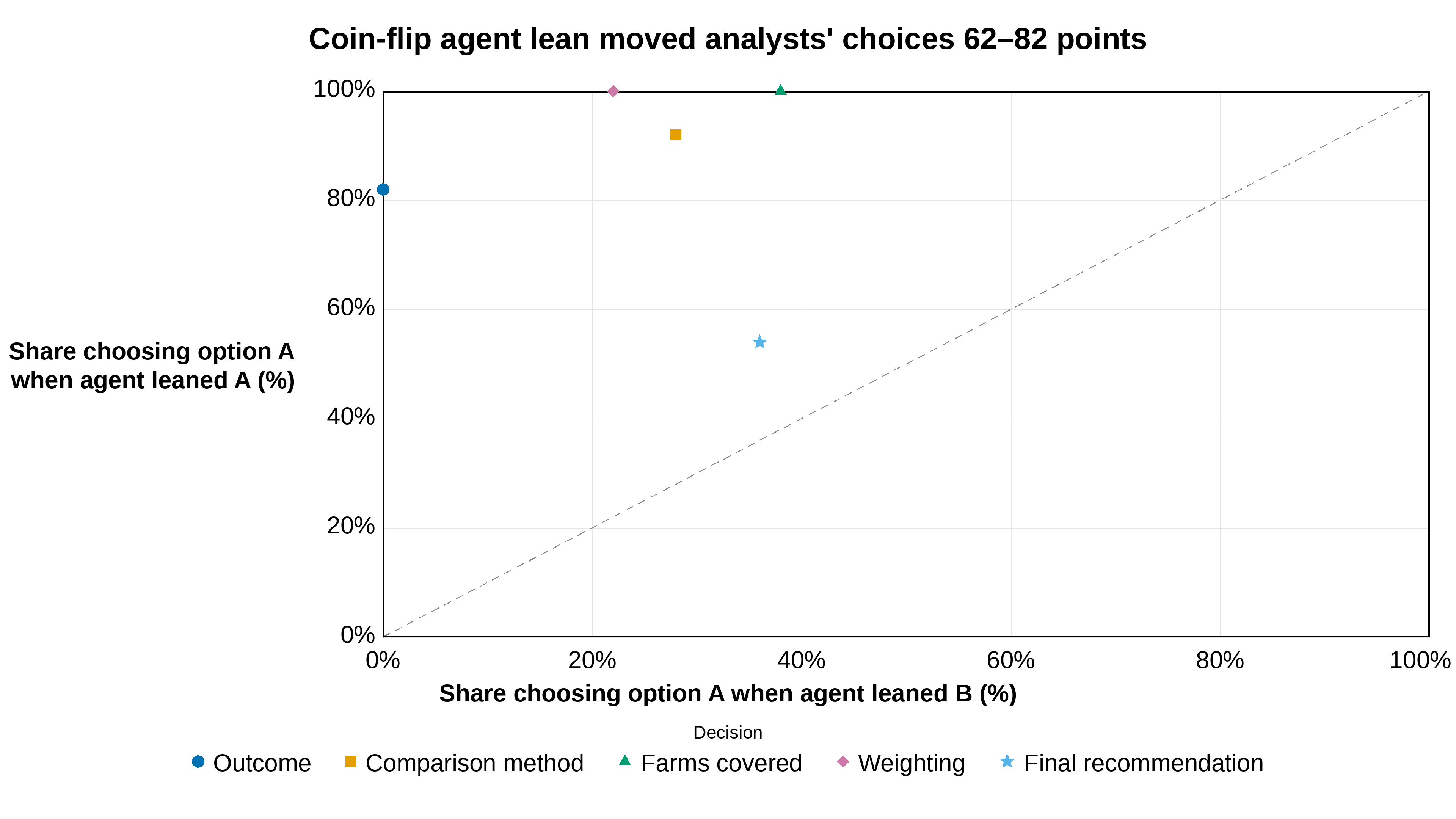
In Anthropic’s randomized trial, 50 professional analysts using Claude Code followed the option their agent had been secretly assigned by coin flip: on each of four analytical decisions, the share choosing option A was 62 to 82 percentage points higher when the agent leaned A than when it leaned B, while the final recommendation moved only 17 points (54% versus 36%). The gap matters because a human sign-off is supposed to be an independent check on AI-assisted work — yet analysts’ choices largely tracked a randomly assigned preference, and 77% later repeated the agent’s arguments while only 15% credited it. The finding comes from the analyst-deference study in the October 28 SI News roundup.
Notes: Shares are Figure 2 values from the Anthropic study: the share choosing option A when the agent leaned B versus leaned A, for 50 analysts (11 of 61 recruits were excluded because they chose not to use the agent). The agent’s lean was set by coin flip and deliberately strengthened so its effect could be measured; the study covers one task, one field, and one model (Claude Opus 4.8). The dashed diagonal marks the no-influence line where the lean would make no difference; the final recommendation counts a one-year extension as not rolling out the program. Legend labels shorten the five decisions: outcome measure, comparison method, farms covered, weighting, and final recommendation.
In Anthropic’s randomized study, professional analysts matched their agent’s deliberately assigned preference in 92% of outcome-measure choices, 82% of comparison-method choices, 81% of coverage choices, and 90% of weighting choices. The consistency shows that AI influence reached the analytical choices experts were expected to own, quantifying the judgment-deference finding in SI News’s report.
With web search on, GPT-6.1 Sol named the Democrat in 97.4% of its major-party answers while Grok 4.7 named the Republican in 91.7%, the mirror image Convovo found across the 2026 midterm races. Turning search off left GPT’s lean almost unchanged at 96.0% Democrat, but Grok’s lean disappeared: it declined to pick in 27 of 30 sample races, and its only three picks named the Democrat. The result, from a forced-choice API prompt that the consumer apps themselves declined, suggests GPT’s lean is baked in while Grok’s depends on what it searches — a distinction that matters for anyone building voter tools on these APIs.
Notes: Shares are of answers naming a Democrat or Republican candidate. The search-off sample covered 30 races: GPT named the Democrat 24 times, the Republican once, and declined 5 times; Grok declined 27 times and named the Democrat 3 times, so its search-off point rests on only 3 picks. The main test used a forced-choice prompt through the models’ APIs with web search on; the consumer ChatGPT and Grok apps declined to answer. The two models agreed in under 10% of races. For context, GPT still picked the Democrat in 57 of 67 heavily Republican districts and Grok still picked the Republican in 47 of 72 deep-blue districts.
Convovo's complete 506-race dataset shows GPT-6.1 Sol chose Democratic candidates in 85.7%–91.7% of Senate, House, and governor races, while Grok 4.7 chose Republicans in 80.0%–86.1% of those same offices. The office-level consistency extends the SI News headline beyond its aggregate figures and shows that the model split was not concentrated in one kind of contest.
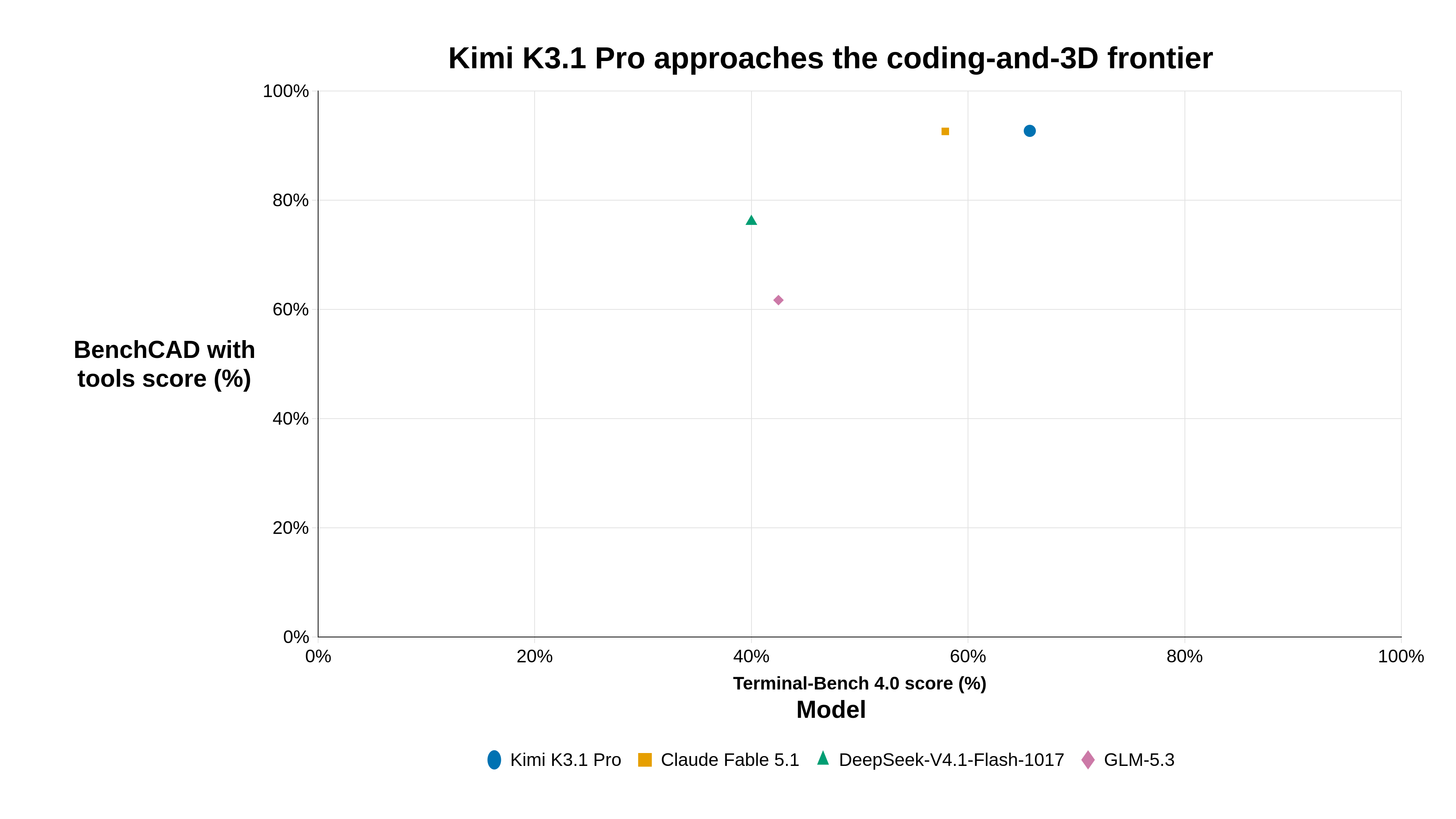
On the launch post's comparable evaluations, Kimi K3.1 Pro scores 65.7% on Terminal-Bench 4.0 and 92.7% on tool-assisted BenchCAD, putting it close to Claude Fable 5.1 and behind only the strongest model on the two-axis frontier. The convergence across coding-agent execution and 3D reconstruction matters because the SI News story presents K3.1 Pro as a broad open-weight challenger rather than a single-benchmark specialist.
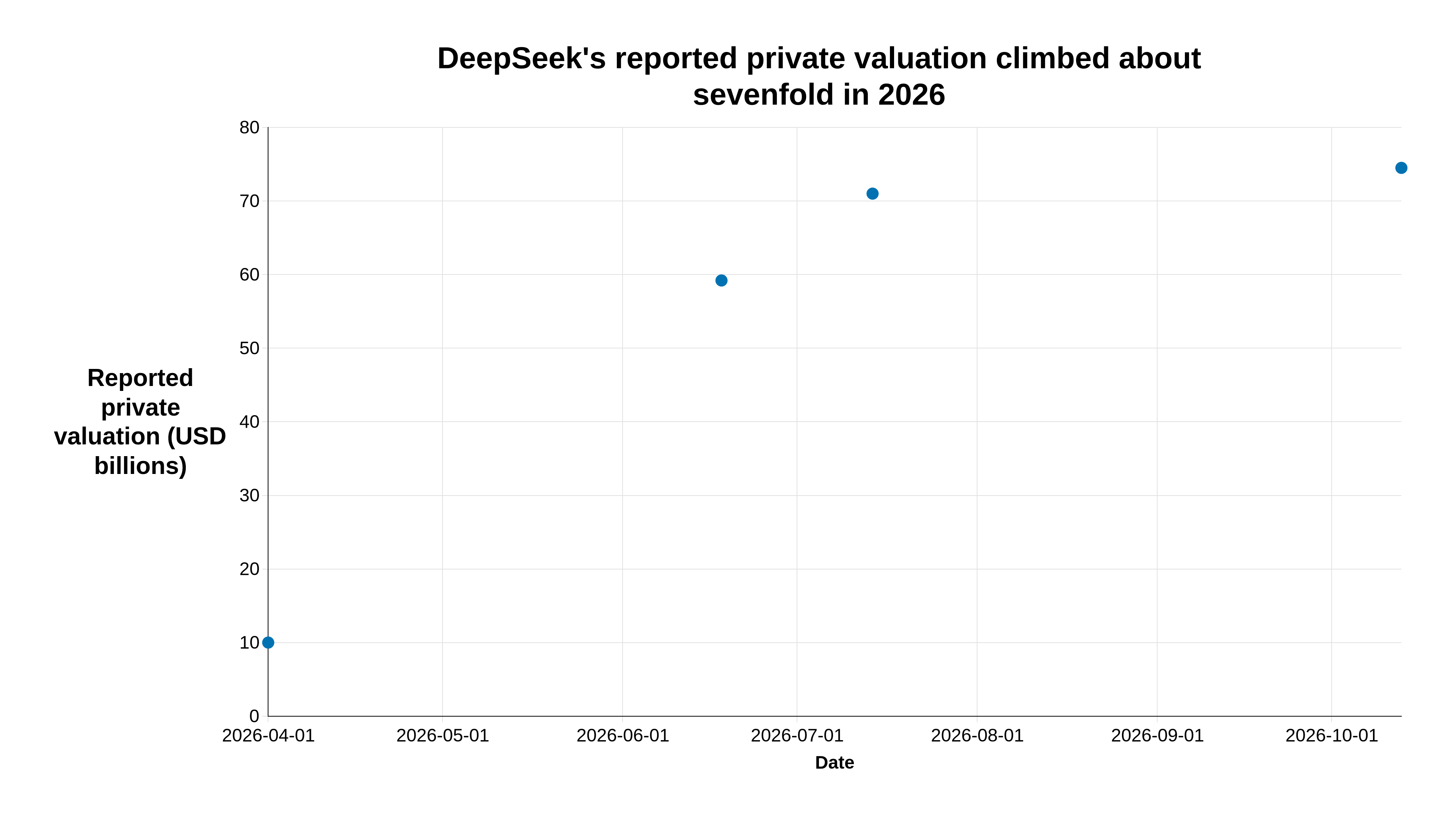
Independent financing reports place DeepSeek’s reported private valuation near $10 billion in April, about $59.2 billion after its June round, at least $71 billion during July fundraising discussions, and roughly $74.5 billion after the October round. The trajectory puts the current funding story in context: the company’s reported valuation expanded sharply as it moved from rejecting outside capital to raising successive multibillion-dollar rounds.
The public OSS Verify index shows only 2.85%–13.71% of recorded proof-status entries marked proved across seven libraries with at least one proof, despite Anthropic’s report of Claude proving security properties for 239 entry points across 123 libraries. That gap matters because the result is a selective verified slice of a much larger fuzzing corpus, not evidence that entire libraries are bug-free, connecting the independent repository data to SI News’s report on scaled formal verification.
PHP’s official lifecycle shows the emergency PHP2Shell fixes can land on 8.2–8.5, whose security support ends from December 2026 through December 2029, but PHP 8.1 and older branches had already reached end of life by the disclosure. That support cliff matters because the AI-assisted discoveries described by SI News affect a widely deployed runtime, yet operators on obsolete branches cannot receive the upstream fix without upgrading. This independently quantifies the remediation window behind the PHP2Shell emergency.