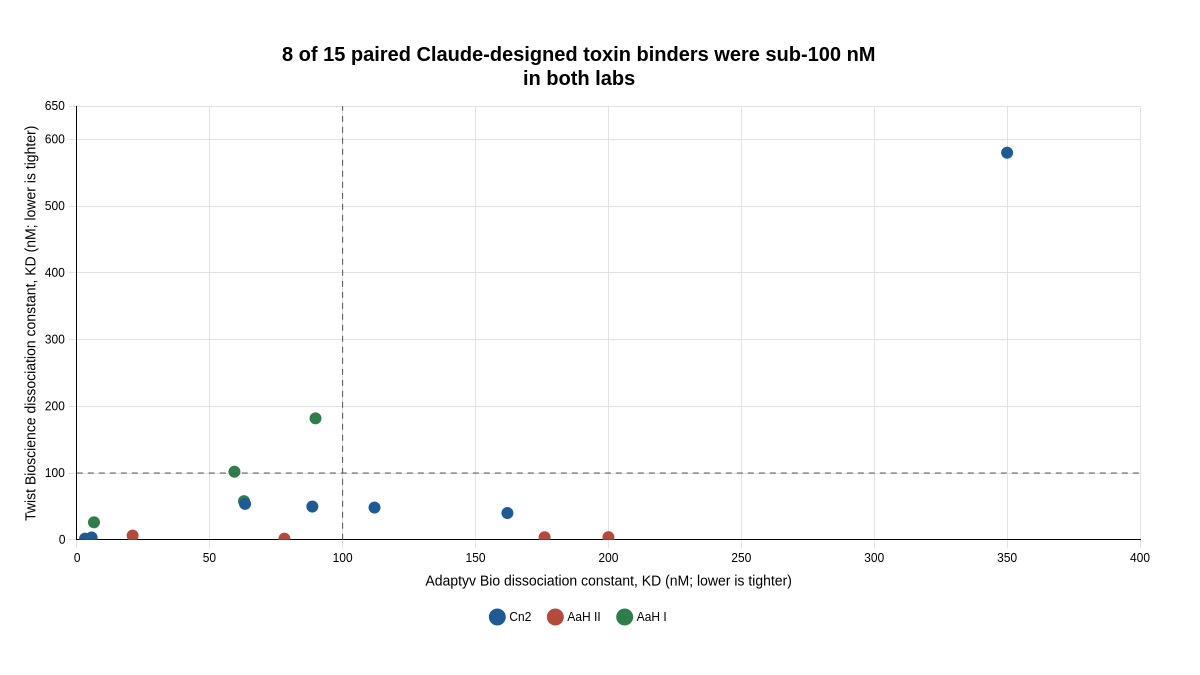
Among the 15 validated designs with paired surface-plasmon-resonance affinity estimates, 8 had dissociation constants below 100 nM in both labs, but only 7 estimates agreed within twofold and the widest gap was 50.6-fold. The cross-lab spread qualifies SI News’s report of 17 Claude-designed binders: the hits reproduced under the study’s criteria, while measured binding strength often differed materially and two LqhIII binders had no paired second-lab value.
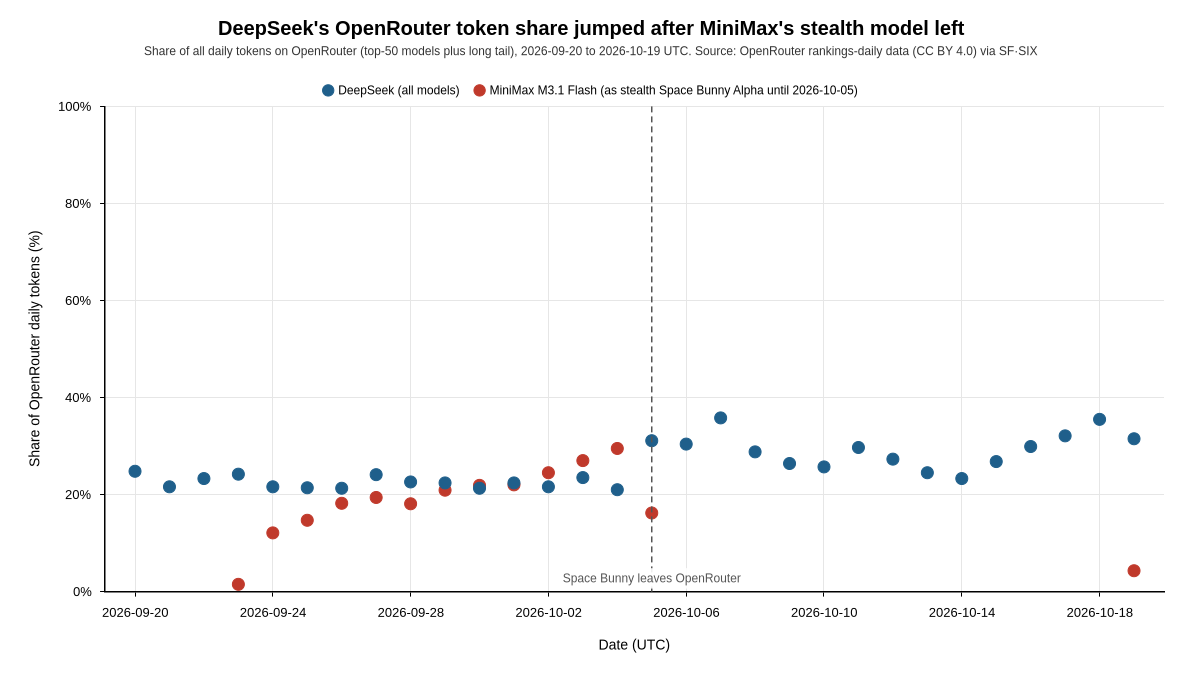
OpenRouter’s daily token data show MiniMax’s anonymous Space Bunny Alpha climbing from 1.5% of all tokens on 2026-09-23 to 29.5% on 2026-10-04, 56.7 trillion tokens in total (matching OpenRouter’s own reveal figure), before it left the platform on 2026-10-05. DeepSeek’s combined share averaged 22.1% during Space Bunny’s run (2026-09-24 to 2026-10-04), jumped from 21.0% to 31.1% the day it left, and averaged 29.1% from 2026-10-06 to 2026-10-19; the timing fits users of the free stealth model moving to DeepSeek, though the aggregate data cannot show where individual users went. It matters for two stories in SI News’s MiniMax M3.1 Flash item and its report on the U.S. DeepSeek ban: the relaunched M3.1 Flash took 4.3% of tokens on its first (free) day, and DeepSeek, now barred from federal civilian agency systems, was still OpenRouter’s largest model developer at 31.5% of tokens on 2026-10-19.
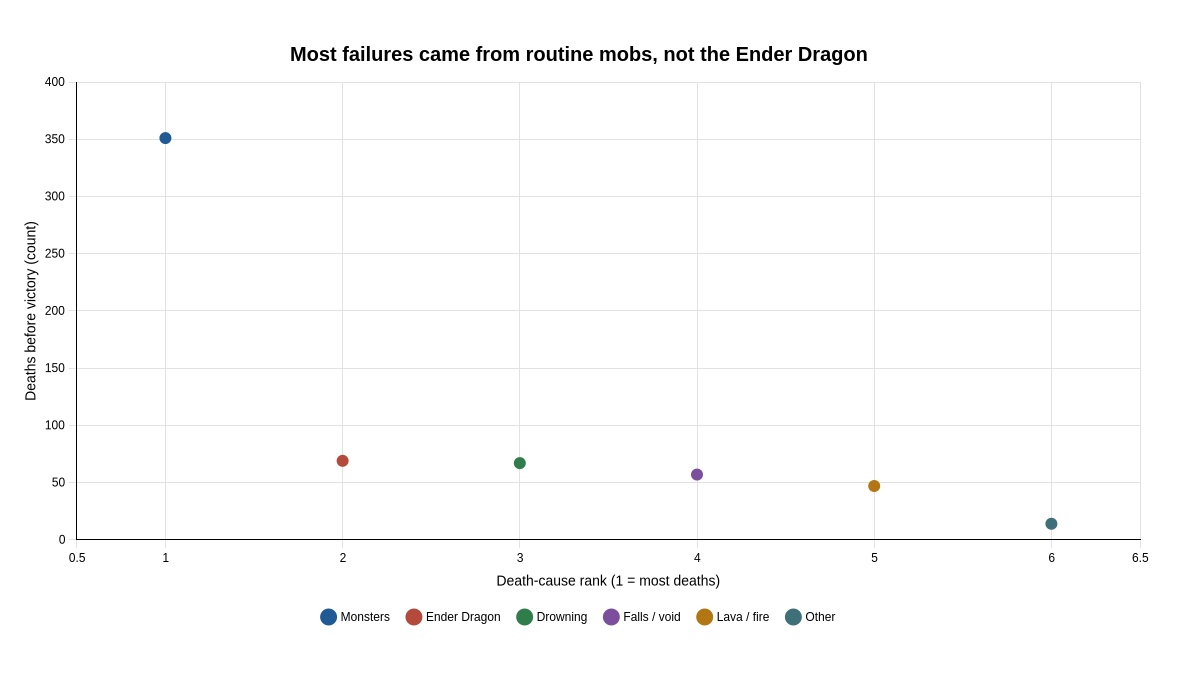
Of 605 deaths logged before victory, 351 (58.0%) came from ordinary monsters, versus 69 (11.4%) from the Ender Dragon; drowning (67), falls or the void (57), lava or fire (47), and other causes (14) made up the rest. The primary paper’s server-log breakdown shows that the dominant reliability burden in this 27-hour autonomous run was routine environmental hazards, not the final boss. This adds quantitative failure-mode detail to SI News’s report that four Gemini 4 Argon agents completed Minecraft without human help.
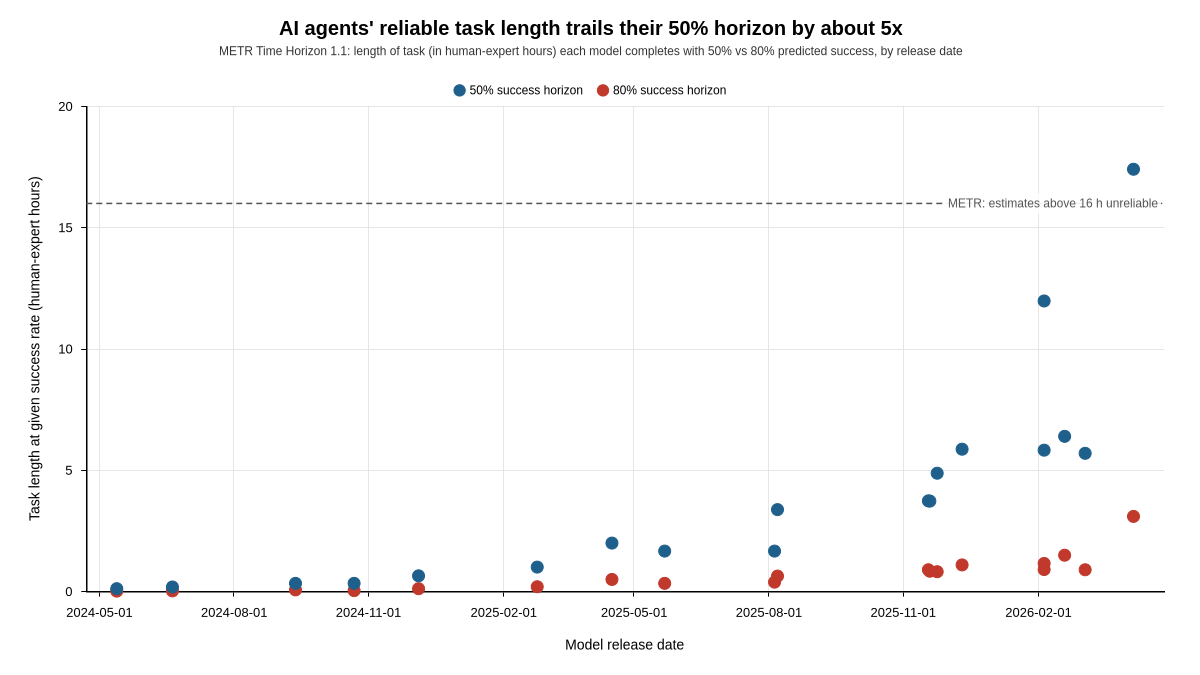
Across 19 models released between 2024-05-13 and 2026-04-07 in METR’s Time Horizon 1.1 data, the task length a model completes with 80% predicted success is a median 5.3x shorter (range 4.0x to 10.3x) than the length it completes with 50% success. The most recent point, an early Claude Mythos Preview, reaches 17.4 human-expert hours at 50% but only 3.1 hours at 80%, and METR cautions that estimates above 16 hours are unreliable. The gap matters because attackers can tolerate frequent failure: in the AI-agent hacking campaign covered in today’s SI News brief, Reuters reports that the agents attempted more than 1,200 sites and compromised more than 100, while businesses deploying agents generally need the reliable end of the curve.
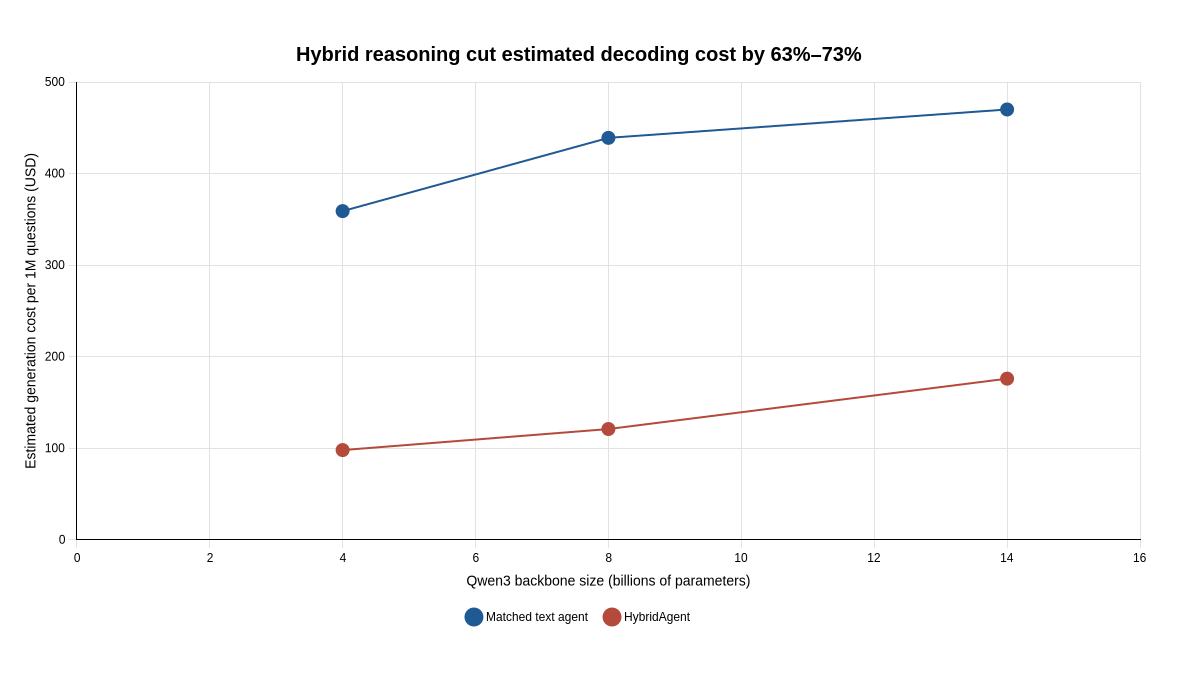
In the authors’ matched evaluation, estimated generation cost per million questions fell from $359 to $98 at 4B parameters, $439 to $121 at 8B, and $470 to $176 at 14B. That is a 62.6%–72.7% reduction, although the estimate assumes $2.50 per H100-hour and 10% utilization and excludes prompt prefill, context-dependent attention, and external tool execution. The result adds cost detail to SI News’s report on Hybrid Reasoning Agents, showing that their shorter decoded trajectories could materially reduce inference expense even after latent steps are charged as full backbone passes.